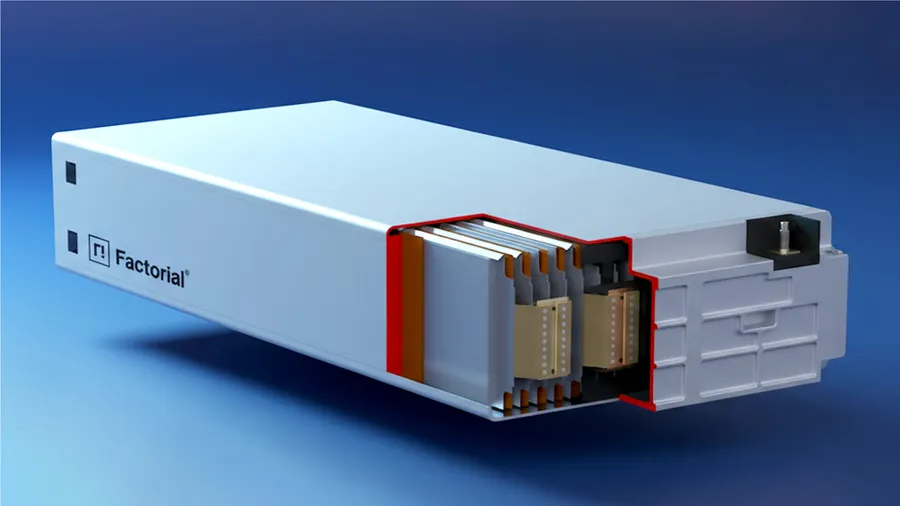
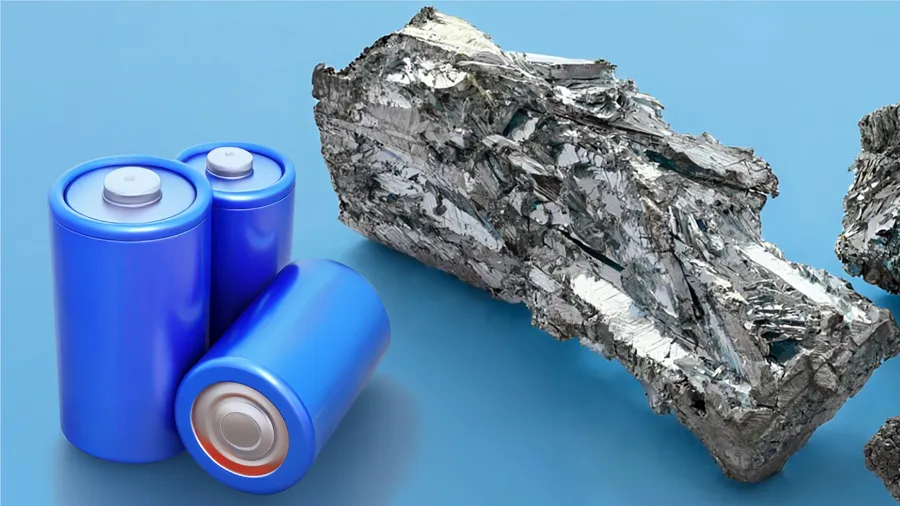
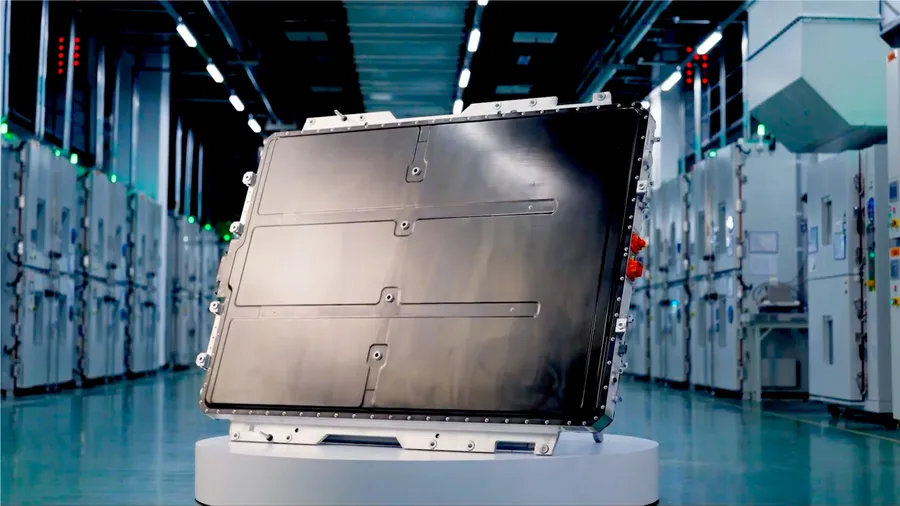
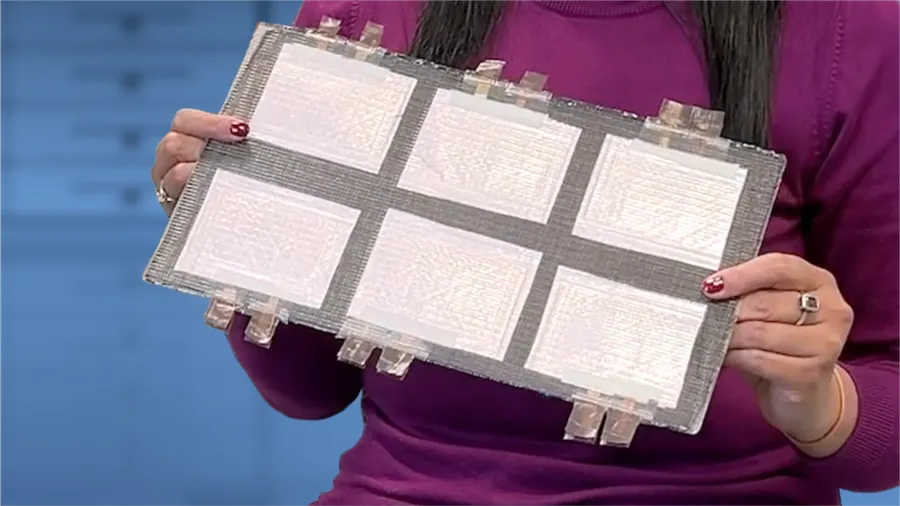
Anyone who’s dropped their phone in the ocean knows seawater is a battery killer.
Unless of course, you make a battery that runs on seawater. And this battery being developed in Korea does exactly that. And not only that, it can also make freshwater from seawater, and pull carbon dioxide from the air.
That means one system doing the job of a battery, a desalination plant, and a carbon capture system. Seriously.
This system is the brainchild, or brinechild, of Professor Kim Youngsik. Along with colleagues he has been quietly building it for over a decade. And here’s the kicker: it might use less energy than today’s leading desalination method.
So how does this ambitious system work? The setup is actually simpler than you’d think, but the real question is whether it’s worth its salt. Because if it is, it might just be the Swiss Army Knife we need to solve our energy and freshwater crises.
I’m all for a good 2-in-1: your EV as a backup house battery, agrivoltaics … sporks. And living in a net zero home, I tend to think about energy and water as part of the the same system. Use one and you often use the other. So when a technology promises to store energy and make water, I want to hear about it.
The case for combining these technologies is a no brainer. We need energy storage and we need more fresh water. With more and more renewables like solar and wind dumping energy into the grid when the sun shines or the wind blows, BloombergNEF predicted that grid battery installations would rise 35% in 2025, and keep growing from there to 220GW a year by 2035.1
Seawater desalination is growing too, at about 7% a year as water scarcity accelerates around the world.2 And desalination is such a power-hungry process, even oil-rich nations are signing up for renewables to power it.3
Seawater batteries can make desalination more efficient. One seawater battery setup used nearly 40% less energy to remover the sodium and chloride from seawater than than today’s standard reverse osmosis method.4 There's synergy in the sea.
But a 3-in-1? That's where I start raising an eyebrow. Pulling CO₂ out of the air on top of everything else sounds like the straw that broke the camel's battery pack. But we'll get to that later.
Despite my skepticism, this is idea is not all pie in the sky. It's just a battery in the sea.
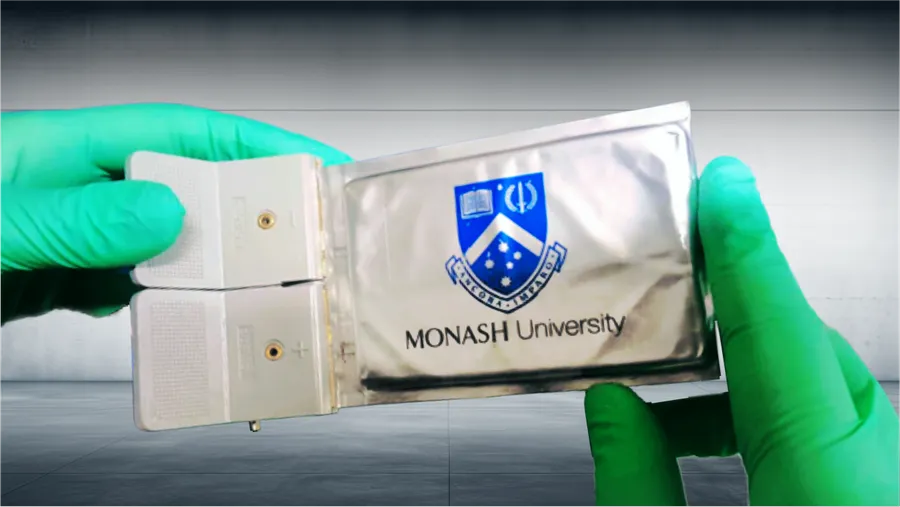
This system was created by Professor Kim Youngsik and colleagues at Korea’s Ulsan National Institute of Science and Technology (UNIST). Professor Youngsik literally wrote the textbook on sea water batteries, it's called...Sea Water Batteries. And this system's development has been supported by government grants, utilities partnerships, and Youngsik’s own startup.56 They’re serious. And they've got big plans.
Youngsik said,6
“Once this battery is commercialized, we can lead the 47 trillion won [or about $42 billion] worth, advanced energy storage devices market. It will become one of the major growth engines in the future of our economy.” — Youngsik Kim, Professor of Energy and Chemical Engineering, UNIST
He’s talking about all seawater batteries, not just the ones that also desalinate and capture carbon. Still, that’s a huge claim. The question is, are his saltwater batteries ready to deliver?
So we know what this battery is, and that it could be important. But how does it work?
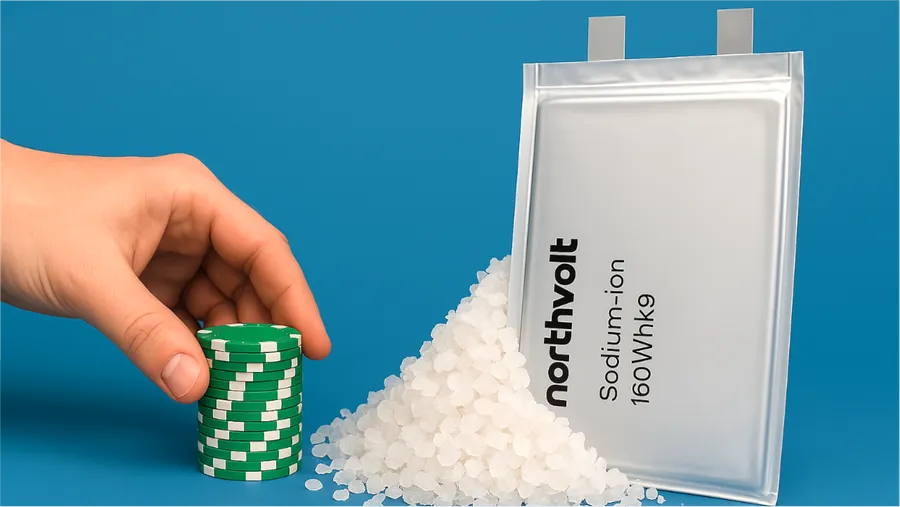
For a battery that runs on seawater you might be thinking, seawater → salt → sodium, but this isn’t a sodium ion battery like the ones I’ve been covering in next-generation EVs.
Sodium-ion batteries promise to replace lithium-ion batteries, swapping out expensive lithium for sodium purified from seawater. Professor Kim's battery uses saltwater piped in straight from the ocean, and turns it into freshwater as it charges. And that requires radically changing the battery design, in ways that cut costs..
In conventional sealed batteries, lithium or sodium ions get packed into a sponge-like cathode when the battery charges. The catch is that the materials that can do that over and over again, like cobalt and nickel-based cathodes, are not cheap.
These seawater batteries address this problem by not using conventional cathodes that store ions.4 Reactions happen right at the surface of the positive electrode, and the ions stay in the seawater.4
That has a big impact on price. About 40% of the material costs of traditional batteries is the cathode. For lithium ion, that’s about $78 per kWh. Lead acid comes in around $53 … but for saltwater batteries? About 10¢ per kWh.4 Ten cents! When is the last time you paid a dime for anything? Ten cents is basically free.
In regular batteries, ions rock back and forth between a positive cathode and a negative anode with each charge and discharge. In a seawater battery the incoming seawater hits a fork in the road. Sodium heads one way, chloride goes another way, and what’s left flowing out the middle is water with most of the salts removed.4
It’s the difference between sitting in an old rocking chair and hurtling down a split-lane waterslide. This one’s way more fun.
So, what’s the secret to sending sodium and chloride down different chutes than the freshwater? Membranes. They act like bouncers at Club Battery, deciding who gets let in and who’s turned away.
Sodium gets the VIP-treatment from a membrane called a Sodium Super Ion Conductor, or NASICON. This ceramic framework (Na3Zr2Si2PO12) is like a maze only sodium can navigate. And it moves through fast.47
Those other seawater salts like calcium, magnesium, and chloride? Those are all held back from Club Battery. They're wearing the wrong chemical dress code.
NASICON membranes pass 98-99% of the sodium. About 69-85% of the chloride gets filtered out by a different membrane at the entrance to chloride’s own waterslide chute.
All of this happens as the battery is charged. Chloride shuffles to the left, into a compartment with a positive electrode…
![[^NR] Fig 5. To keep the audience’s eyes from glazing over, I’m thinking to use this diagram, showing just (a) charging or (b) discharging at a time. We’ll want to eliminate the grey boxes on the bottom, as well as the Na-BP callouts and arrows. The references to chlorine gas, and alkaline hydroxides should go as well.](https://ud-qi20ne.subspace.rocks/content/images/2026/07/nr-fig-5-to-keep-the-audience-s-eyes-from-glazing-over-scaled.png)
… and sodium passes right through that NASICON membrane into a special compartment closed off from the air.4
And this is the part of a seawater battery that blows my mind. On the other side of the NASICON membrane … the sodium is no longer in seawater; it’s in a fluid with no water at all. And that lets sodium … half the salt in your salt shaker … plate as pure metal. I just find that wild!
The part that’s genuinely satisfying about the way this seawater battery works is that charging the battery and desalinating seawater aren't two separate processes. They’re one and the same. The separation of sodium and chloride into different compartments is the charge separation of the battery.
That’s reflected in the energy savings. For the same amount of sodium chloride (NaCl) removed from seawater, today’s leading desalination technique reverse osmosis needs 4.06 Wh. This technique did it with just 2.51 Wh in lab tests.4 That’s nearly 40% less energy. Because instead of forcing water through a reverse osmosis membrane with high-pressure pumps … here you’re just charging a battery.
Whether that makes this battery a Swiss Army Knife worth carrying … we'll get to that in a bit. Especially since we still haven't seen the discharge side, where it pulls CO₂ out of the air.
Those of you keeping track are probably wondering about those other ions like magnesium and calcium. They're not cool enough to make it past the velvet rope at Club Battery. Only about 80% of the salts in seawater are sodium and chloride.4 That means the water flowing out the bottom of this seawater battery still has some salts left in it, and they're disappointed they got all dressed up for nothing.
Compare that to seawater that went through reverse osmosis desalination. i It uses more energy for the same amount of sodium chloride (NaCl), but removes all the different salts including magnesium and calcium in one go.
This is my least favorite part of this seawater battery system. It's a full battery, but only a partial desalinator. The remaining salts still need to be removed in an extra reverse osmosis desalination step.
What’s even more frustrating when I comb through tech news, is when the press release oversells the tech … and I don’t find out until my team or I am eyeball deep in the science paper behind it. That’s exactly what happened with the original discovery that sent me down a desalination battery rabbit hole.
Researchers found that a sodium ion battery with a sodium vanadium oxide cathode holds nearly twice as much charge when they leave the cathode material wet. That flies in the face of conventional cathode wisdom and … kinda makes sense. The water molecules hold open and stabilize the cathode structure, letting sodium ions enter and exit the matrix easier. That means less stress on the cathode each time it charges and discharges.8
This is something I don’t think gets enough airtime: the sheer size of sodium ions makes them even trickier to insert and extract without damaging the cathode. If a lithium ion were a baseball , a sodium ion would be a softball, about 2.5 times bigger by volume.91011 This kind of discovery could help sodium ion batteries catch up to lithium … though vanadium cathodes are pretty spendy.
Here’s where it gets messy. The press sold this wet cathode as a battery setup that could store twice as much energy and desalinate water at the same time. In reality, those results came from two separate experiments, not a shared system. The higher capacity battery uses a regular electrolyte. The desalination system uses super salty brine water … not even seawater ... in early stage tests with a ton of problematic side reactions.12
This is the kind of deep dive I do to cut past the hype, so we can get back to the battery system that already desalinates seawater.
Now, we're at the part I've been waiting for. What keeps me excited about this battery is that when it discharges, when you get electricity back out, it’s also pulling carbon out of the air, helping offset the carbon footprint of running the system in the first place.
Three ingredients are required to make this happen: carbon dioxide, alkaline water, and those magnesium and calcium salts naturally present in seawater.
During discharge, that sodium metal turns back into sodium ions and exits into another seawater compartment. The water there is alkaline from oxygen reacting at the positive electrode during discharge.[^NR; fig 5b] And here's the important piece of this: alkaline water readily absorbs carbon dioxide when air is bubbled in.
Mix those three ingredients together, and you get carbonates that fall right out of the water as a powdery dust at the bottom, locking carbon away.
It’s kinda like watching cheese curds form from liquid milk. Except the carbonate tastes like chalk, and the curds are delicious on top of fries and gravy … my Canadian viewers can help explain this in the comments. I gotta stop filming right before lunch.
So how much carbon can this battery actually remove? Is this a gimmick or a godsend? The math isn’t certain just yet, but the researchers estimate that producing 150 m3 of treated seawater each day would also pack away between 640 and 1,280 kg of CO₂.4 That’s like taking 50-100 cars off the road while providing freshwater for 1,000-1,500 people for the day.1314 The potential here is really impressive.
![[^JPS] Fig 5](https://ud-qi20ne.subspace.rocks/content/images/2026/07/jps-fig-5.png)
A Saltwater Battery Worth its Salt?
So what’s the catch? Well, the details of the full 3-in-1 system are still being worked out at Ulsan National Institute of Science and Technology.
Researchers are hoping to make that ceramic NASICON membrane even more durable. That’s key to lowering costs, because ceramics have to be sintered at high temperatures, which uses a lot of energy.
Right now, seawater batteries seem to trade one expense for another, swapping expensive traditional cathodes for expensive membranes. But here’s an important difference: the price of rare cathode metals like cobalt isn’t coming down. With more development, these ceramic membranes made from abundant materials could actually become cheaper .
Another open question is whether the energy savings in the lab will hold up in the real-world . Seawater isn't just saltwater, there's all sorts of ocean gunk in the deep. These batteries will need to run for years while managing the inevitable fouling: the accumulation of all that extra stuff ,4 which includes everything from salt deposits to biofilms, which are known to plague water loops in real-life industrial facilities.
The battery part of the 3-in-1 system is furthest along. Saltwater batteries are already powering the flashing lights on marine buoys. That’s exactly the kind of salty environment where traditional batteries corrode and fail.1516 That puts the saltwater battery itself at about a TRL of 5 or even 6. The potential added benefits, like desalination and carbon capture, those sit closer to TRL 3 and 4.
I've been covering desalination for years on this channel, and the biggest challenge has been just how much energy it uses. So much so that in some parts of the world, desalination plants are built right alongside or even integrated into power plants.17 That’s why I was so excited to see the energy savings of this 3-in-1 system. So, is it worth its salt?
As a battery … it’s getting there. As a desalination and carbon capture system … the jury’s still out … in part because no single system has been built that does all three simultaneously.4 It’s not a Swiss Army knife just yet, it's an experimental Korean sea battery in development.
The question I keep coming back to is … does this have to compete as a desalination method with reverse osmosis? Or can it just complement it?
Desalination is already starting to run on renewable energy. At two key plants in Saudi Arabia and the United Arab Emirates, 20-30% of the power comes from nearby solar fields.31819 That’s got me asking: could seawater batteries be sited at reverse osmosis plants where both seawater and know-how are already on tap? And who better than an RO facility to polish the water into drinkability?
- BloombergNEF – Global Energy Storage Growth Upheld by New Markets ↩
- EU Blue Economy Observatory – Desalination ↩
- Energy Intelligence – Desalination in a Net-Zero World ↩
- Nature Reviews Clean Technology – Seawater batteries for energy storage, desalination and carbon sequestration ↩
- DongA Science – Ulsan City and UNIST Accelerate Research on 'Seawater Batteries' that Generate Electricity from Seawater ↩
- UNIST – UNIST to Engineer New Eco-Battery, Using Seawater ↩
- Wikipedia – NASICON ↩
- EPA – Greenhouse Gas Emissions from a Typical Passenger Vehicle ↩
- Genaq – Water Consumption in a Household ↩
- Journal of the Electrochemical Society – Development of Rechargeable Seawater Battery Module ↩
- Korea JooAng Daily – Seawater batteries are tested on offshore buoys ↩
- Aquatech Trade – Does size matter? Meet ten of the world's largest desalination plants ↩
- Cox Group – Coxabengoa Group begins commercial operation of the complete Taweelah desalination plant in Abu Dhabi ↩
- Water Online – ACWA Power Inaugurates Jubail 3A IWP (Jazlah Water Desalination Company), The First Large-Scale Integrated Water Desalination - Solar PV Project In Saudi Arabia ↩